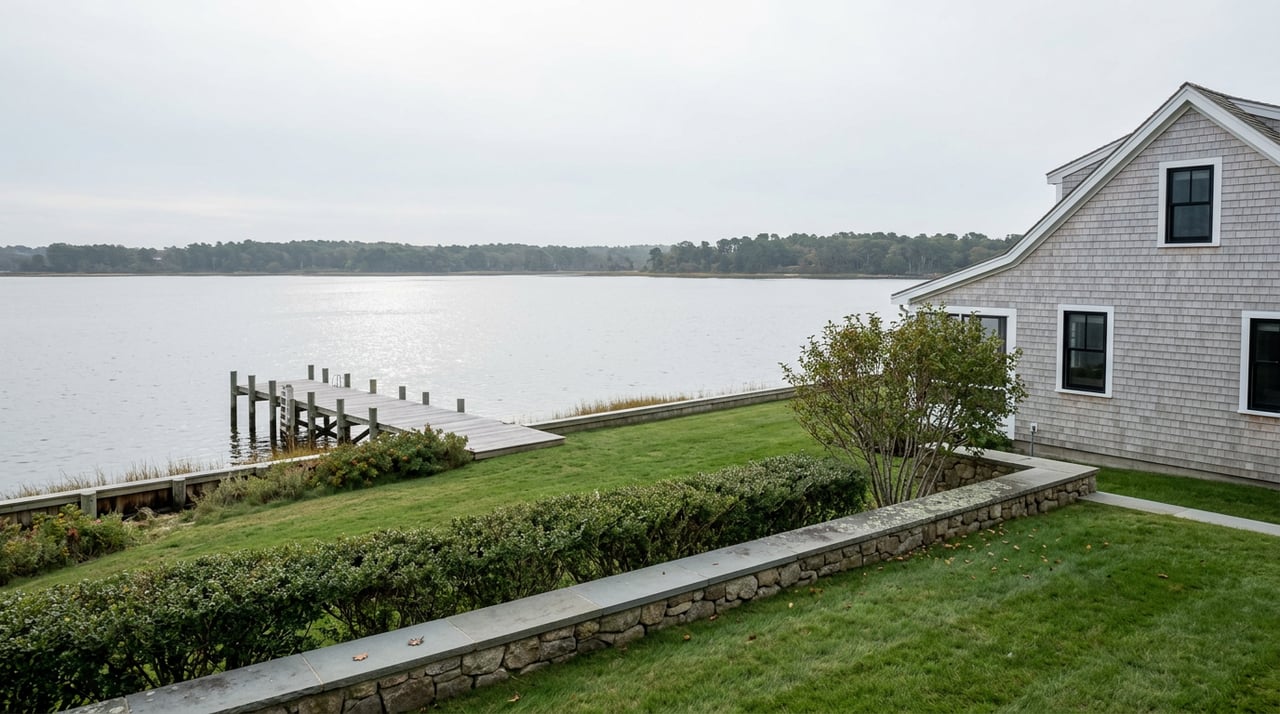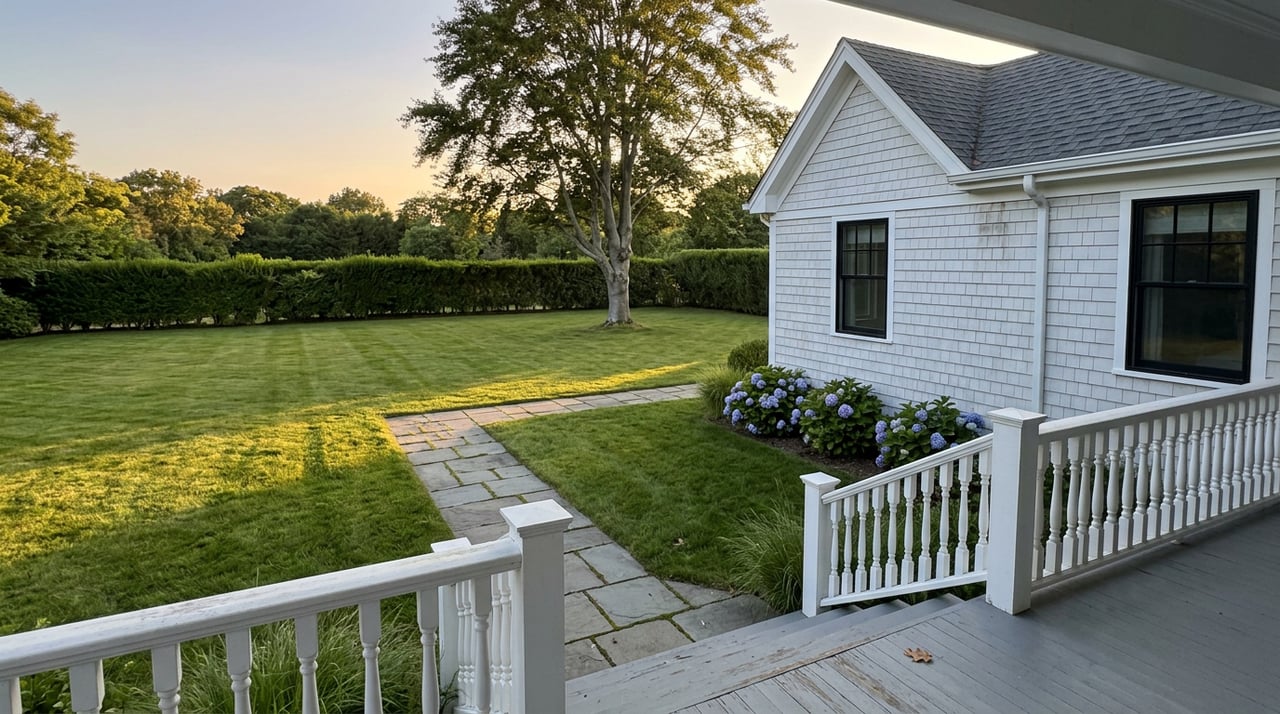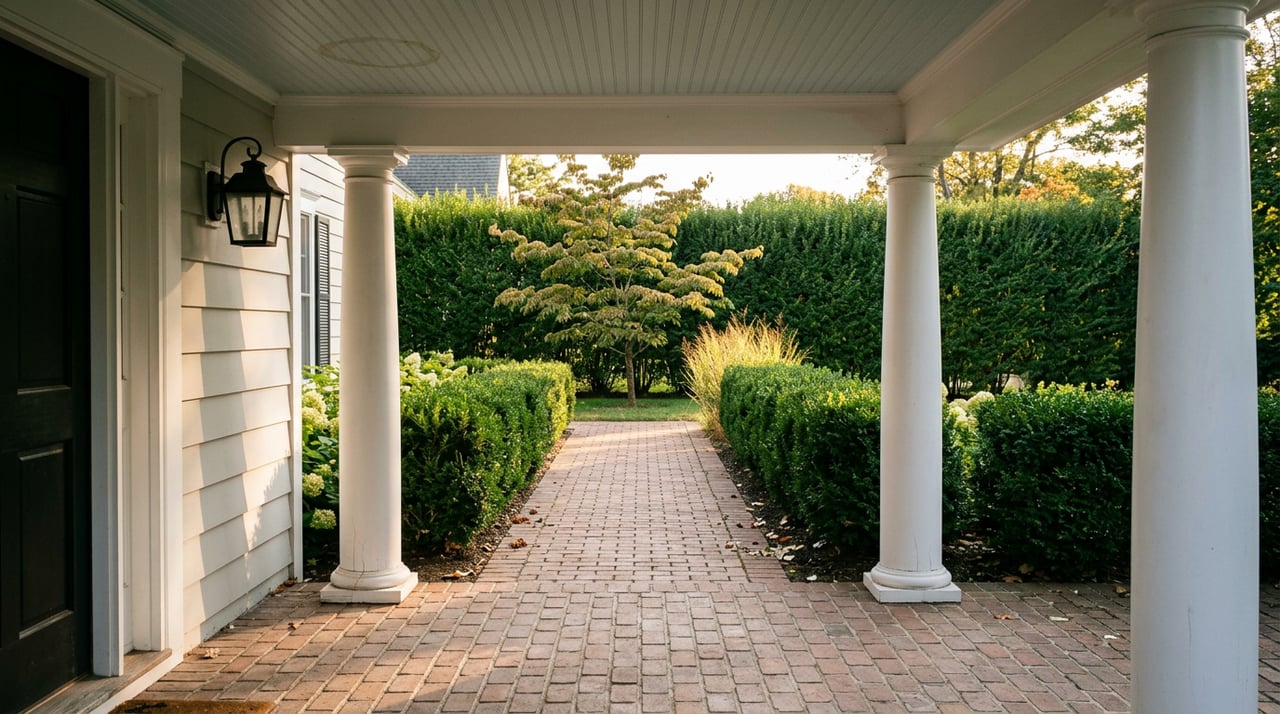
A buyer walks through an older shingle-style cottage on Quogue Street with a contractor and a rough plan: new kitchen, expanded primary suite, maybe a pool house down the line. The contractor pencils out a number. Then asks one question that changes everything: what did the appraisal say the house is worth right now, before any of this?
That question is not a formality. In the Village of Quogue, it is the line between a renovation that moves through the system in a season and one that pulls in a second layer of regulatory review, a mandatory infrastructure upgrade, and a timeline measured in months rather than weeks. The trigger has nothing to do with taste, permits for a deck, or square footage added. It has to do with a single ratio: the cost of the work against the appraised value of the structure that already stands there.
Most renovation guides for the Hamptons talk about the Design Review Board and stop there. That is only the first gate.
The Board That Reviews Before the Contractor Breaks Ground
Quogue is an incorporated village, which means building permits and design approval run through the village government rather than the Town of Southampton. Almost any exterior change, a new roofline, a different siding, an addition, has to go in front of the village's Design Review Board before a building permit is issued. The board's own procedures describe the review as a judgment call about whether a proposed structure is compatible with the character of the neighborhood, which in practice means Quogue's boards move carefully and favor traditional materials and proportions over anything that pushes the envelope.
The board meets on a regular cycle, with sessions typically once a month alongside the Planning Board and the Zoning Board of Appeals. A public notice runs in the Southampton Press at least ten days before each meeting, and the village mails notice directly to the applicant and to every owner of contiguous property or property across a street or body of water. That is not a rubber stamp process. It is a public one, and it takes time to schedule.
For a buyer used to town-level permitting elsewhere on the East End, that is the first adjustment. The second is bigger.
The Number That Reprices the Whole Project
Suffolk County's sanitary code draws a bright line around what counts as a major reconstruction: any project where the construction cost exceeds fifty percent of the appraised market value of the existing structure. Cross that line and the county requires an Innovative and Alternative Onsite Wastewater Treatment System, the nitrogen-reducing septic technology that has become standard across unsewered Suffolk County since the county closed its cesspool-replacement loophole. The Village of Quogue has had its own version of this rule since 2018, requiring nitrogen-reducing systems for any newly built home or any home undergoing what the village calls a significant renovation.
Installing one of these systems runs between roughly twenty-five thousand and forty thousand dollars, according to the village's own published guidance. That is not a cosmetic add-on. It is excavation, a design professional's engineering plan, soil sampling, and a new system sized to the number of bedrooms the county's Department of Health Services says the house can support.
Here is where the ratio gets interesting for anyone shopping in Quogue's estate section rather than at the top of the market. A modest older cottage with a lower appraised value hits the fifty percent threshold on a much smaller renovation budget than a home that is already worth four or five million dollars. A buyer planning an ambitious gut renovation on a lower-priced fixer is statistically more likely to trip the wire than someone doing the same scope of work on a newly built or recently renovated estate. The fifty percent test is not really about how big the project is. It is about how much room the existing appraisal leaves before the county decides the whole structure is effectively new.
Recently renovated listings across Quogue Village bear this out. It is common to see updated homes advertise a new septic system in the same sentence as a new roof and refreshed bathrooms, evidence that this upgrade has become part of the standard renovation checklist rather than an edge case.
The Bamboo Law Nobody's Renovation Checklist Mentions
Quogue's Village Board adopted a new local law in late July 2026 that prohibits any new bamboo plantings within village limits. Mayor Robert Treuhold, explaining the reasoning to the Southampton Press, said the plant is having an adverse effect because it's uncontrollable, and the village wanted a way to stop new plantings outright.
Existing bamboo is grandfathered, but with conditions. Root systems have to be contained in an above-ground vessel that sits at least ten feet from any adjoining property line, homeowners need a permit from the village building inspector to keep it, and if the existing planting dies or is removed, it cannot be replaced with bamboo of any kind. A first violation carries a fine of up to twenty-five hundred dollars. Southampton Town, outside the village line, has no equivalent restriction.
For a buyer or seller planning a renovation that includes privacy screening or landscape architecture, this is a new variable worth checking before the closing walk-through, not after.
| Regulatory layer | What triggers it | Who reviews it | Rough cost or fine |
|---|---|---|---|
| Design Review Board | Any exterior alteration or new structure | Village DRB, meets monthly | No direct fee, but adds review time |
| Nitrogen-reducing septic | Construction cost exceeds 50% of appraised structure value | Suffolk County DHS and village building department | $25,000 to $40,000 |
| Bamboo law | New plantings, or expansion of existing stands | Village building inspector | Up to $2,500 for a first violation |
The Grant Money Most Buyers Never Factor In
The septic trigger sounds like a pure cost surprise until you look at what is actually available to offset it. Suffolk County's Septic Improvement Program offers fifteen thousand dollars in county grant funds plus another ten thousand in matching New York State funds, for twenty-five thousand dollars in combined assistance. Southampton Town layers an additional rebate of up to twenty thousand dollars on top of that, which can cover costs like reinstalling landscaping disturbed during installation.
Stack those together and a homeowner facing a mandatory upgrade can offset most, sometimes all, of the cost. The catch is processing time. The village's own guidance notes that grant applications for non-failure upgrades, meaning the system still works but the renovation is forcing the issue, can take several months to clear. That timeline runs on its own clock, separate from the Design Review Board's monthly meeting cycle, which means a buyer who assumes the septic decision can happen in parallel with framing and drywall may find it is actually the long pole in the schedule.
There is a second piece of village policy worth knowing if the lot is large enough to support it. Quogue's Workforce Housing District includes a Plus One Accessory Dwelling Unit program offering grants of up to one hundred twenty-five thousand dollars toward construction costs for homeowners who commit to renting the finished unit as workforce housing. On a property with an existing outbuilding or garage suited to conversion, that grant can turn what would otherwise be a pure renovation cost into a partially subsidized addition, provided the design still clears the same Design Review Board that reviews everything else in the village.
What This Means Before You Sign a Renovation Budget
The naive version of this story is that Quogue punishes big renovations with a surprise septic bill. The more accurate version is that Quogue's rules are largely designed to be affordable, between county and town grants, but slow. The real cost of crossing the fifty percent line is not the twenty-five to forty thousand dollars for the system itself. It is the number of months that grant processing, DRB scheduling, and public notice periods add to a project a buyer may have budgeted as a single summer's work.
For anyone evaluating an older home in Quogue Village with renovation in mind, the useful first step is not a contractor's estimate. It is an appraisal of the structure as it stands today, run against the proposed construction budget, before an offer goes in. That single ratio determines whether the project moves through the village on a straightforward timeline or picks up a second agency, a grant application, and a longer runway than the listing photos suggest.
A Few Questions Worth Asking Directly
Does the fifty percent rule apply to the purchase price or the appraised value of the house itself? It is based on a licensed appraisal of the existing structure, compared against a design professional's construction cost estimate, not the price paid for the property.
If my renovation stays under fifty percent, do I still need to touch the septic system? Suffolk County closed the door on replacing a failed cesspool with another cesspool, so any mandatory replacement requires at least a conventional septic system. The nitrogen-reducing requirement specifically attaches to new construction and major reconstruction as defined by the fifty percent threshold.
Is the Design Review Board process different for a home outside the village but still in Quogue's zip code? Yes. Village jurisdiction stops at the incorporated line. Homes in East Quogue or other unincorporated areas nearby fall under Town of Southampton permitting, which does not include the village's Design Review Board or its bamboo law.
If you are weighing a Quogue Village property with renovation in mind, the numbers behind the listing matter as much as the finishes in the photos. Natalie Lewis works this market from the design and construction side as much as the transaction side, and can help you read what a specific property's appraisal, lot, and renovation plan actually mean before you write an offer. Reach out to book a consultation or request a home valuation.