Pull up three real estate sites and search "Remsenburg-Speonk" and you will get three different stories about the same place. One shows a median sale price in the low seven figures. Another, filtered to waterfront only, shows something closer to double that. A third, looking at list prices instead of closed sales, lands somewhere in between. None of these sites made an error. They are each accurately describing a different market that happens to share a name.
That is the thing worth understanding before you compare Remsenburg-Speonk to anywhere else on the East End. It is not one hamlet with an inconsistent data feed. It is two hamlets, informally split by an eight-decade-old civic institution that never had zoning authority and never needed it.
The Border No One Officially Drew
Remsenburg-Speonk is a single census-designated place inside the Town of Southampton, and it has never been incorporated as its own village. There is no mayor, no village hall, no village zoning code the way there is a few miles east in Quogue or Westhampton Beach. What exists instead is a name that covers two places locals have always treated as distinct: Remsenburg, closer to Moriches Bay, and Speonk, the more inland side around the Long Island Rail Road station and Montauk Highway.
The two names trace back to a genuinely local dispute. In 1895, the post office serving the area was renamed from Speonk to Remsenburg, a change some residents welcomed and others resented enough that both names simply stayed in use, each attached to a different part of the community. According to the local history referenced by the Greater Westhampton Chamber of Commerce, the rough dividing line runs parallel to Montauk Highway, roughly 500 feet to its south, though the chamber itself notes that the boundary has never been official and the community's population cannot be reliably counted because of it. Add in a large share of part-time, seasonal residents, and even a basic headcount becomes an estimate rather than a fact.
That ambiguity matters more here than it would somewhere with a hard village line. When there is no boundary, there is nothing stopping data providers from drawing their own, and no reason to expect any two of them to draw it the same way.
An Association, Not an Ordinance
If Remsenburg's bay-front side has stayed quiet and residential while Speonk absorbed the hamlet's commercial activity, the explanation is not a zoning map. It is the Remsenburg Association, a civic group founded in 1946 with an explicit goal: preserve the area as a quiet, rural community and discourage any new industrial, trade, or business use beyond agriculture. Nearly eighty years later, that mission is still visible on the ground. Remsenburg has no stoplights and very few commercial businesses of any kind. The Association also leases the historic Remsenburg Academy, a building owned by the Town of Southampton, and uses it to host meetings, lectures, and art exhibitions, which keeps the civic infrastructure active rather than symbolic.
A second organization, the Speonk-Remsenburg Civic Association, formed later in 1989 with a broader charter covering both hamlets' welfare and civic advancement. The two groups are not the same thing, and the distinction is useful for anyone trying to understand how this place actually governs its own character. One is older and narrower, built specifically to keep commercial development out of Remsenburg. The other is newer and wider, representing both communities on shared concerns. Neither one is a government body. Neither has the legal power to deny a building permit the way an actual zoning board could.
That is worth sitting with if you are evaluating property here for the long term. The reason Remsenburg has stayed the way it has is social pressure sustained across generations, not a covenant recorded on any deed. It has worked for eighty years. It is not the same kind of protection as an enforceable zoning restriction, and it would be a mistake to assume it carries the same guarantee.
What the Numbers Are Actually Measuring
Here is where the inconsistency across sources stops looking like noise and starts looking like evidence. Three data points, pulled from three different points in 2026, each measuring something slightly different:
| Source and window | What it measured | Figure |
|---|---|---|
| 12 months of sales through mid-June 2026, Remsenburg specifically | Closed sale prices | $1,069,000 median, down 32% from the prior 12-month period |
| March 2026 snapshot, Remsenburg specifically | Active list prices | $1.41 million median, $863 per square foot |
| March 2026 snapshot, Remsenburg-Speonk waterfront listings only | Active list prices, waterfront filter | $2.35 million median across 12 listings, averaging 157 days on market |
None of these numbers contradict each other. They describe different slices of a small, unevenly distributed market: closed sales versus active listings, the Remsenburg side specifically versus the whole waterfront segment, a 12-month trailing window versus a single spring snapshot. In a market this size, with waterfront estates on one end and modest inland homes on the other, changing any one of those filters can move the median by hundreds of thousands of dollars without anything in the underlying market actually shifting.
The practical takeaway is not to distrust any single number. It is to stop treating "the Remsenburg-Speonk median" as a meaningful figure on its own. Ask which side of the informal line a listing sits on, whether it touches Moriches Bay or one of the creeks feeding it, and whether the figure you are looking at reflects closed sales or hopeful list prices. Those three questions will tell you more than the headline median ever will.
What This Means If You're Comparing Listings
For a buyer weighing Remsenburg-Speonk against a neighboring hamlet, the practical guidance is straightforward:
- A listing near the LIRR station or along Montauk Highway on the Speonk side is buying into the hamlet's only commercial corridor, with the convenience and traffic that implies.
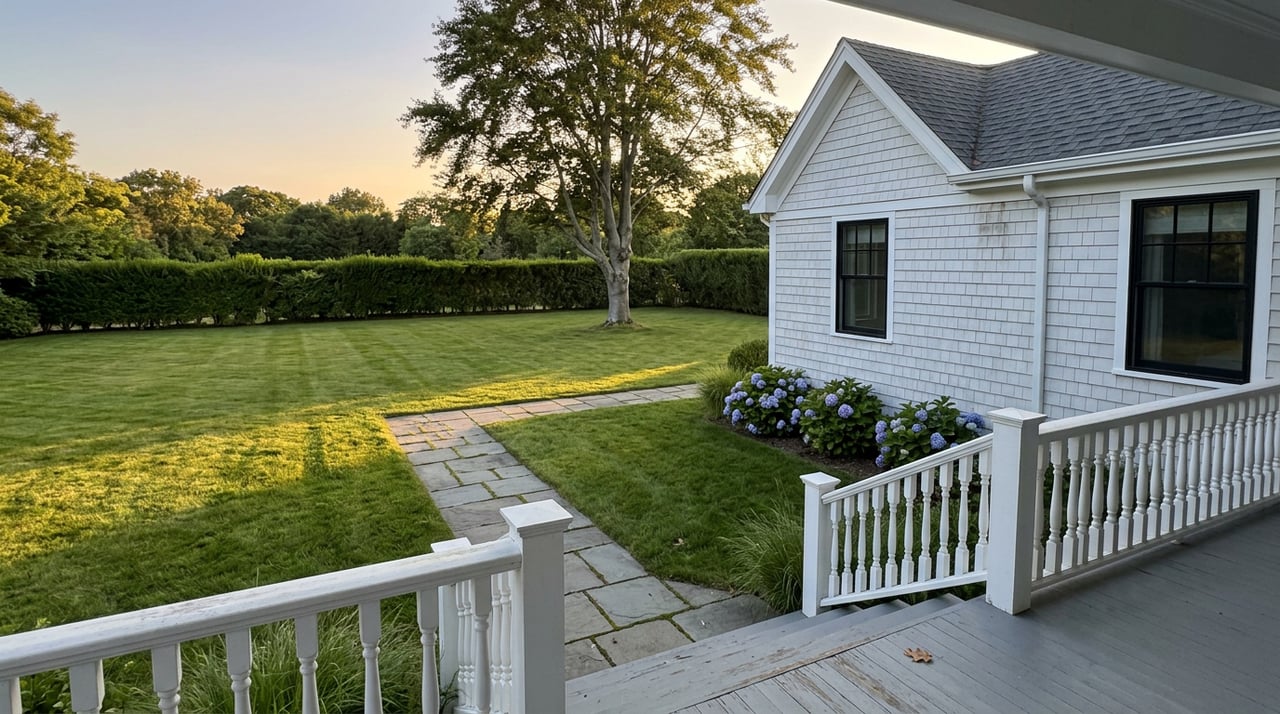
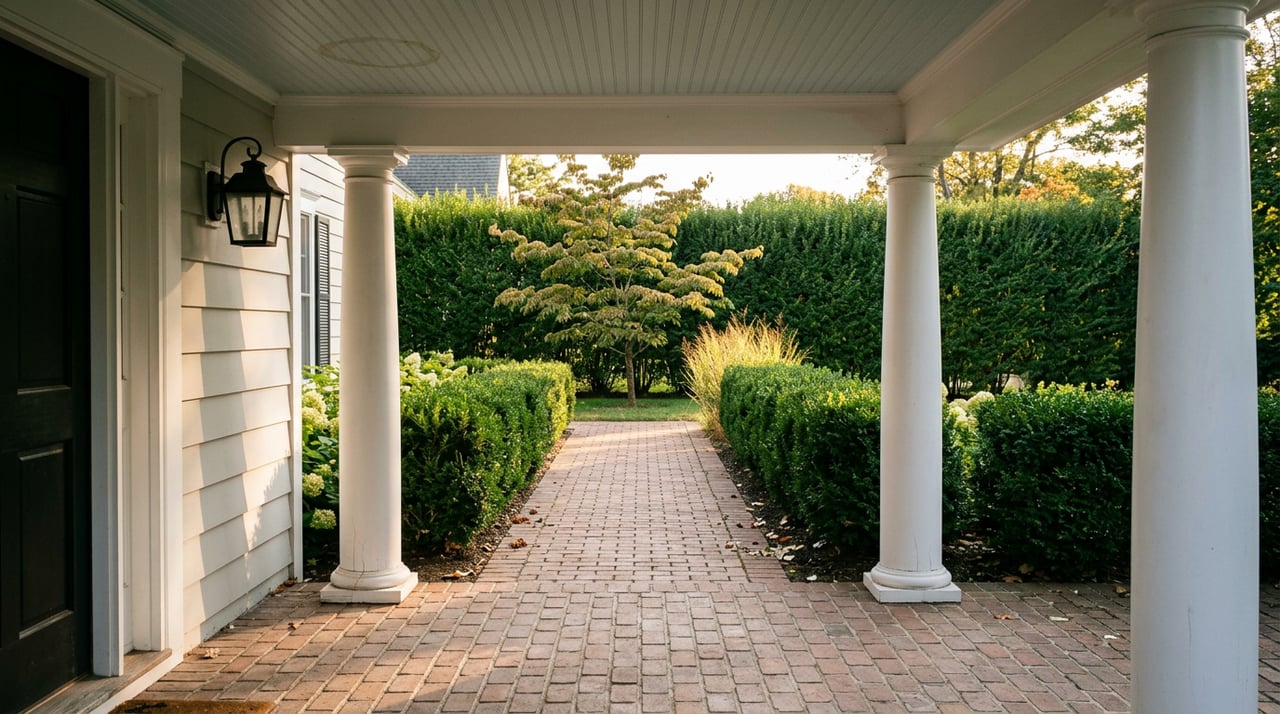
- A listing south of that corridor, on a lane locals would identify as Remsenburg, is buying into a deliberately preserved, low-commercial character that has held for generations through community pressure rather than legal restriction.
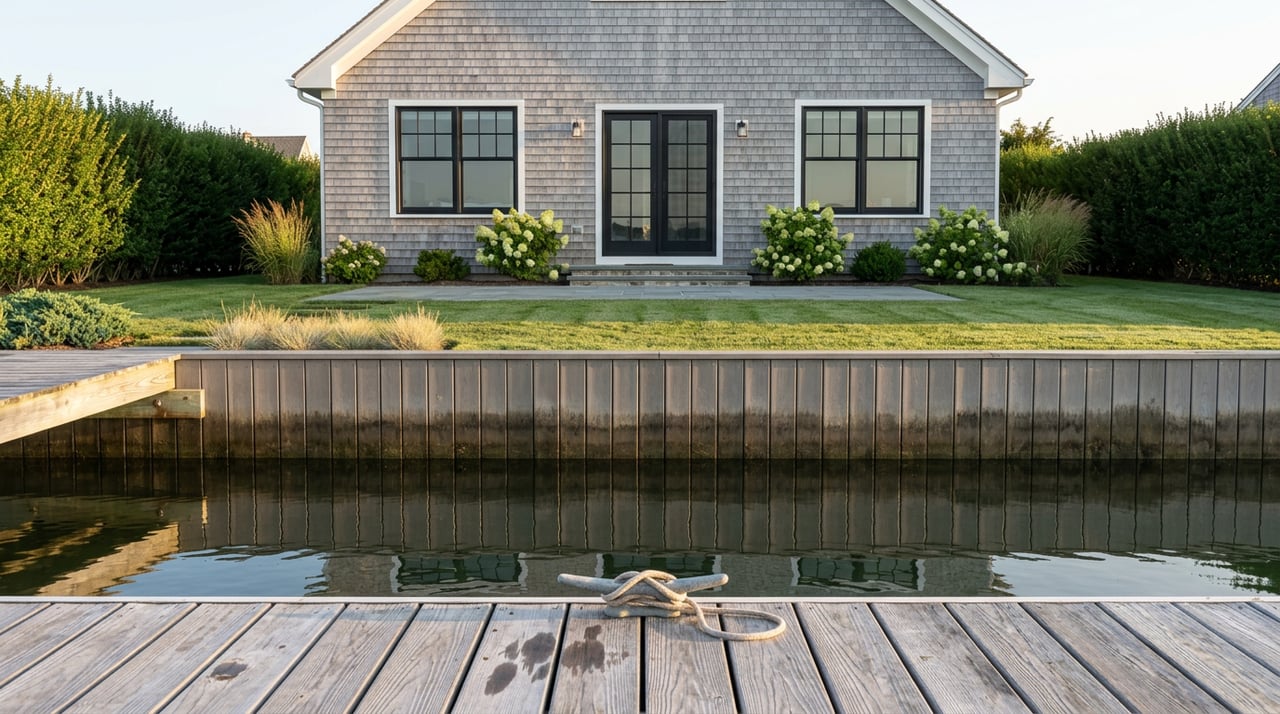
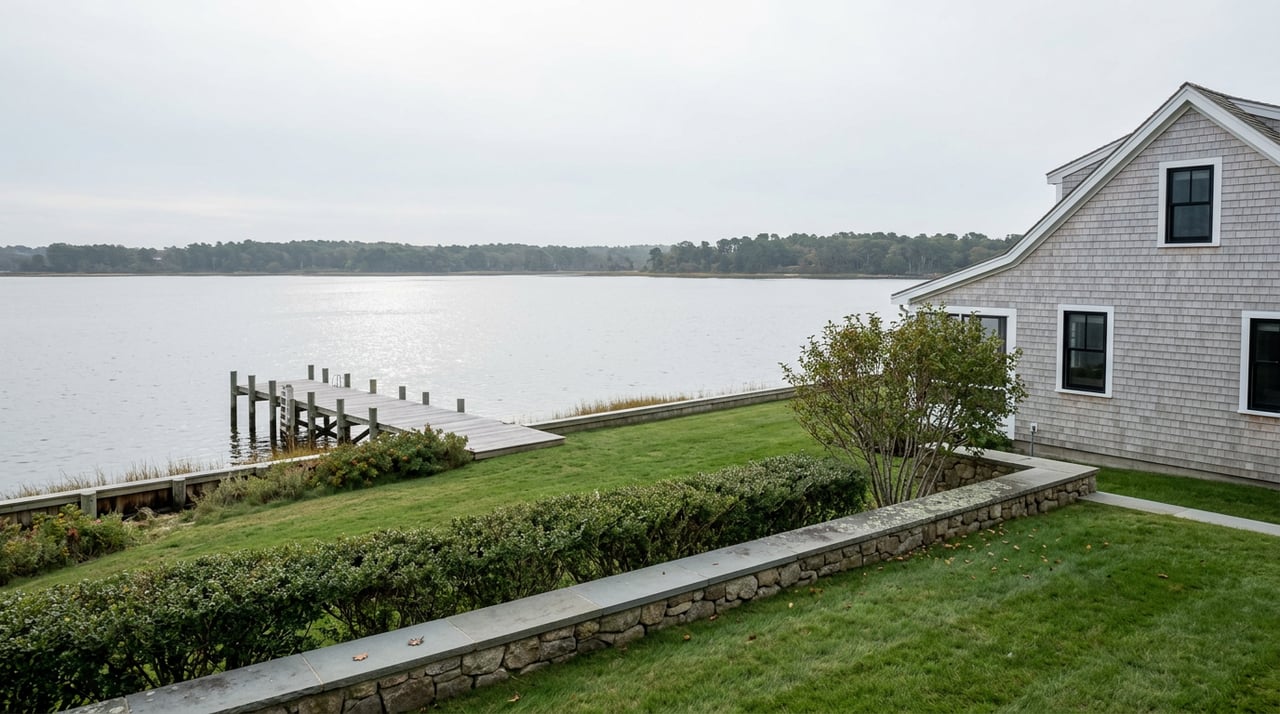
- Waterfront properties on Moriches Bay or its connecting creeks command a real premium over the inland portion of the same CDP, which is part of why blended medians swing so widely depending on how many waterfront sales land in a given window.
- Because none of this is codified in a village zoning code, buyers weighing the long-term character of the area should treat the Remsenburg Association's influence as a strong historical pattern, not a legal guarantee.
The Post Office Test
One quirk sums up the split better than any statistic. Remsenburg households still collect their mail at the post office rather than receiving home delivery, a holdover residents describe as inconvenient in theory but a regular occasion to see neighbors in practice. Most of Speonk, north of Montauk Highway, gets standard home delivery. It is a small, almost trivial difference, but it is also a clean proxy for the larger pattern: one side of this hamlet was built and has stayed built around a slower, more insular rhythm, while the other absorbed the infrastructure and convenience that comes with sitting next to a train station and a highway.
For second-home buyers weighing lifestyle as much as price, that quirk is worth more than it looks. It tells you which side of Remsenburg-Speonk you are actually choosing.
A Few Questions Worth Asking Directly
Is Remsenburg or Speonk an incorporated village? No. Neither is. The entire area is unincorporated and falls under the Town of Southampton, which is part of why there is no single zoning authority governing the whole community.
Do Remsenburg and Speonk share a school district? Yes. Both fall under the Remsenburg-Speonk Union Free School District, which rules out school boundaries as the explanation for the pricing split. The divide is about land use and civic history, not education.
Why do the median prices I find online vary so much? Because "Remsenburg-Speonk" is not one uniform market. Depending on the source, you may be looking at closed sales or active listings, the Remsenburg side alone or the full waterfront segment, a 12-month window or a single-month snapshot. Each is accurate. None is the whole picture on its own.
Buying into a place like this means understanding the difference between a line on a map and a line drawn by eighty years of community habit. Natalie Lewis has spent her career reading exactly that kind of local nuance across the East End's coastal hamlets, translating it into decisions that hold up once the closing is done. If you are comparing Remsenburg-Speonk to another Hamptons submarket, or trying to figure out which side of an informal boundary actually fits the home you want, reach out to Natalie A. Lewis for a conversation grounded in the details that matter, not the median that happens to be on your screen.