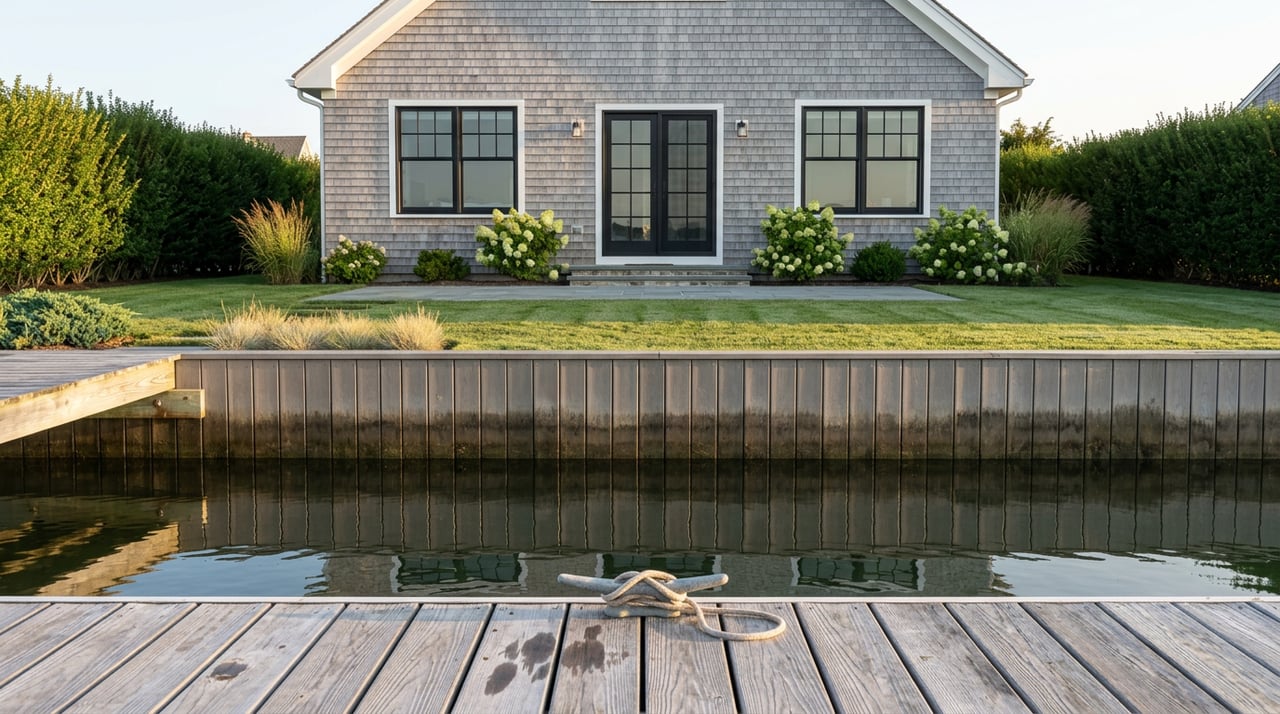
If you are dreaming about buying near the water in East Quogue, the view is only part of the story. A bayfront, canal-side, or ocean-adjacent property can offer a remarkable lifestyle, but it can also come with extra rules, insurance questions, and permit issues that are easy to miss at first glance. If you know what to verify before you buy, you can move forward with much more confidence. Let’s dive in.
Understand the water location
In East Quogue, “near the water” can mean very different things from one property to the next. Town materials place East Quogue among Southampton’s west-side communities relative to the Shinnecock Canal, and local planning documents note waterfront parcels on Dune Road that connect to Shinnecock Bay, while the broader shoreline context also includes Atlantic Ocean frontage on the south side of the hamlet, according to the Town of Southampton.
That matters because your exact relationship to the water affects more than the view. It can shape flood risk, insurance needs, building rules, and the type of shoreline permits tied to the property. Before you assume a home is simply “waterfront” or “water-view,” confirm whether the parcel sits by the bay, canal, or ocean side.
Check flood maps first
Before you focus on finishes, dock access, or outdoor space, verify the property’s flood zone. FEMA identifies the Flood Map Service Center as the official source for flood hazard mapping products, including Special Flood Hazard Areas, base flood elevations, and risk premium zones.
This is one of the first numbers I would want a buyer to review on any East Quogue coastal property. Flood zones can vary significantly by address, even within the same area. A parcel-specific 2025 Southampton planning file for 94 Dune Road in East Quogue noted that portions of the site were mapped in FEMA Zone VE, which FEMA treats as a coastal high-hazard area with stricter building requirements.
That example does not mean every East Quogue property falls into the same category. It does show why address-level due diligence matters. If you are comparing several homes, checking each address individually can help you avoid broad assumptions that do not hold up in contract or underwriting.
Why flood zones matter to buyers
Flood-zone details can affect your purchase in several ways:
- Whether flood insurance may be required by your lender
- How much your insurance could cost
- What future improvements may need to comply with elevation standards
- How buyers may view the property at resale
FEMA and FloodSmart materials note that federally regulated or insured lenders require flood insurance for buildings in Special Flood Hazard Areas when the loan is federally backed. Even if a lender does not require coverage, coastal buyers often still want to understand the risk clearly before closing.
Ask for the elevation certificate
The second document to request early is the elevation certificate. According to FloodSmart’s guidance on elevation certificates, this document shows a building’s elevation relative to expected floodwaters, may be on file with the local floodplain manager, and can be especially relevant in high-risk Zone A or coastal Zone V areas.
In practical terms, the elevation certificate can help you understand how the house sits in relation to flood risk. It can also affect insurance pricing because first-floor height is part of how risk gets assessed. On elevated coastal homes, this document can become a key part of your budgeting process.
If the seller does not already have one, that is worth discussing early in the transaction. It does not automatically kill a deal, but it may change your timeline, your underwriting process, or the number of professionals you need involved before closing.
Plan for separate flood insurance
One of the biggest surprises for waterfront buyers is that a standard homeowners policy typically does not cover flood damage. The New York State Department of Financial Services explains that flood coverage is usually purchased separately through an NFIP policy.
DFS also notes two points that are especially important for East Quogue buyers. First, a flood policy normally does not go into effect until 30 days after purchase. Second, coverage for basements, crawlspaces, and ground-level enclosures is limited, which can be very relevant for elevated coastal homes.
What this means for your timeline
If you are buying near the water, insurance should be part of your early due diligence, not a last-minute item. Waiting too long can complicate closing plans, especially when lender requirements, mapping questions, and insurance timing all intersect.
A smart approach is to review these items as soon as you are seriously considering the property:
- Current flood-zone designation
- Existing flood-insurance information, if available
- Whether an elevation certificate exists
- Whether any lower-level spaces may have limited flood coverage
Review docks and bulkheads carefully
If the property includes a dock, bulkhead, catwalk, or other shoreline structure, do not assume that “existing” means fully approved, transferable, or easy to alter. In East Quogue, shoreline work may involve review from more than one agency.
The New York State Department of Environmental Conservation tidal wetlands permit program explains that tidal wetlands line much of Long Island’s salt-water shore, bays, inlets, canals, and estuaries. DEC regulates activities in tidal wetlands and adjacent areas that can extend up to 300 feet inland, and the agency specifically lists docks, piers, wharves, bulkheads, dredging, fill, septic systems, and related work among activities that may require review.
For buyers, that means the presence of a structure is only the starting point. You want to know whether it was permitted, whether it complies with current rules, and whether future repairs or changes will trigger a new review process.
Repairs are not the same as changes
DEC makes an important distinction that comes up often in waterfront transactions. Replacing broken boards on a functional dock is different from changing the dock’s length, width, or position, and those types of changes generally require permits.
Southampton’s Trustees also regulate dock and bulkhead construction. The Town of Southampton Trustees page notes that the town has applications for new work, reconstruction, and replacement of docks, dredging, and bulkheads. Town code further states that Trustee permits are issued for one year, must be posted on site with DEC and U.S. Army Corps permits as applicable, and that repairs or modifications of existing structures require a permit.
That is why I always recommend asking for the full permit history early. If a listing describes a dock or bulkhead as “repairable,” you will want to confirm exactly what kind of work is being discussed.
Know local shoreline rules
Even when a structure is already there, local design and maintenance rules can still affect how you use and maintain it. Southampton code includes requirements tied to structural integrity, setbacks, materials, and size limits for certain docks.
The town code also includes waterbody-specific length caps, with examples that include Shinnecock Bay and Quantuck Bay, and it prohibits treated lumber on Trustee-approved structures, according to the relevant Southampton code provisions. These details may sound technical, but they can have a direct impact on repair costs, renovation plans, and long-term value.
If the parcel fronts the ocean, there may be another layer to review. DEC’s waterways, coastlines, and wetlands guidance notes that construction, grading, excavation, fill, and other land disturbances in coastal erosion hazard areas along the Atlantic Ocean and Long Island Sound are regulated activities.
Confirm land rights and permit history
One of the most useful steps you can take is to request documentation before you are too far into the deal. Southampton’s permit materials show that applications for docks, dredging, and bulkheads can require surveys, plans, photos, and other supporting items, which is why the town forms and applications page is helpful context for buyers.
A solid due-diligence checklist for an East Quogue waterfront purchase includes:
- Confirm the flood zone for the exact address
- Ask whether an elevation certificate exists
- Request permit history for docks, bulkheads, catwalks, dredging, or fill
- Verify whether waterfront improvements sit on private land, an easement, or a Trustee right-of-way
- Review whether any shoreline project could affect your closing timeline or post-closing plans
This is also where timing becomes important. Southampton’s Trustee process can involve hearings and review periods, so a planned shoreline project may take longer than expected, even if the structure already exists in some form.
Why lead time matters
Waterfront closings often need more runway than inland purchases. Flood mapping, insurance, surveys, elevation data, and shoreline permits can all affect the same transaction. When flood insurance may also have a 30-day waiting period, the timeline becomes even more important.
If you are buying a second home or planning immediate post-closing work, building in extra time can reduce stress and help you avoid rushed decisions. The more complete your document review is upfront, the easier it becomes to evaluate the property on both lifestyle and ownership terms.
Buy with clear eyes
Buying near the water in East Quogue can be incredibly rewarding, but the smartest purchases start with facts, not assumptions. The address-level flood zone, the elevation certificate, the insurance structure, and the permit history for any shoreline improvements all deserve careful attention before you close.
If you want a thoughtful, detail-oriented approach to evaluating East End waterfront opportunities, Natalie Lewis can help you navigate the process with clarity and local insight.
FAQs
What should you verify first when buying near the water in East Quogue?
- Start by confirming the exact water relationship of the parcel and checking the address in FEMA’s official flood map system.
Will you need flood insurance for an East Quogue waterfront home?
- If the property is in a Special Flood Hazard Area and your loan is federally backed, flood insurance is generally required, and separate coverage may still be worth considering even when it is not required.
Why is an elevation certificate important for an East Quogue coastal property?
- It shows a building’s elevation relative to expected floodwaters and may help with compliance questions and insurance pricing, especially in Zone A or Zone V areas.
Can you repair an existing dock or bulkhead in East Quogue without permits?
- Not always, because Southampton requires permits for repairs or modifications of existing structures, and changing a dock’s dimensions or location generally triggers permit review.
Why can an East Quogue waterfront closing take longer than expected?
- Waterfront transactions may involve flood-zone review, insurance setup, surveys, elevation documents, and shoreline permit history, all of which can add time to the process.